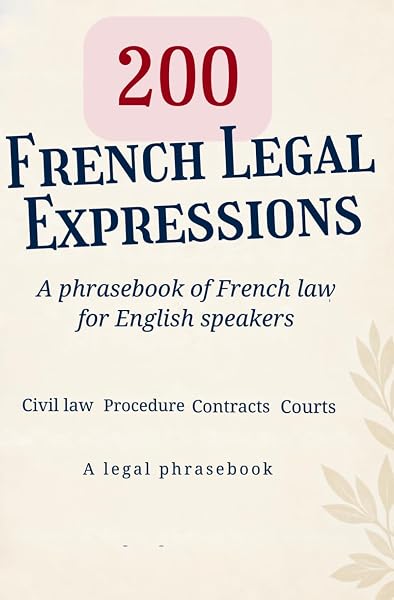
French law does not translate word for word. Force majeure, cause, astreinte, mise en demeure, référé: behind each term lies a concept with no exact common-law twin—and a single mistranslation can distort a contract, a pleading, or a piece of advice. 200 French Legal Expressions is the working reference that bridges the gap, giving English speakers the right equivalent, the right field, and the traps to avoid, for two hundred essential terms of French law.
Built for professionals who need to be right, not approximate, it turns the vocabulary of French law into something you can read, understand, and use with confidence.
WHAT MAKES THIS BOOK DIFFERENT
One term per page, in a clear, consistent layout. For every expression you get:
The French legal expression, as used by courts, counsel, and official textsA natural English equivalent (sometimes two, when English splits the idea)The field of law in which the term lives—contract, property, family, companies, employment, criminal, procedure, public lawThe meaning, explained in plain EnglishA note for common-law readers, flagging false friends and the concepts that do not map across systemsHow to use it correctlyTwo French example sentences, each with an English versionWHAT YOU'LL GAIN
Translate and draft with precision, not guessworkUnderstand French contracts, judgments, and correspondenceAvoid the false friends that trip up even fluent speakersGrasp how a term actually functions in the French systemBuild reliable, professional legal vocabulary, one page at a timeWHO IT'S FOR
English-speaking lawyers and in-house counsel working with French law or French clientsLegal translators and interpretersLaw students—comparative law, Erasmus, LLM, and French-law coursesParalegals, notaries' and firms' staff, and cross-border professionalsAnyone who must read, write, or negotiate across French law and EnglishHOW TO USE IT
Work through one page a day, or open it at random when a term lands on your desk. Read the French example aloud, check the false-friend note, and reuse the term correctly in your own work. The pocket format keeps it within reach at the office or in court.
Get the term right the first time. Speak the language of French law—in English.
Note: This book is a learning and reference tool, not a substitute for the codes, case law, or a specialist treatise, and not legal advice. Always verify against current sources for any specific matter.